
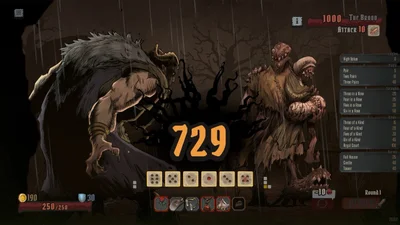
The three GrimKeep builds best supported by published hero and item effects are Feral sixes, Beast Kinds, and Huntress saved rerolls. Each one uses a hero perk and a few documented items to raise a different part of the damage formula. These are build plans based on published synergies, since the full game launches on November 30, 2026. How strong each one ends up depends on which items appear, their prices, and launch balance.
How builds work in GrimKeep
A build in GrimKeep is the combination of your hero, your dice bag, and your items. The official gameplay overview presents item and dice optimization as the core loop of a run. You change your bag and collect items so that the same pattern pays off turn after turn.
Damage follows a simple formula: add Dice Points and Combo Points, then multiply by Mult. Every build in this guide raises one or more of those three numbers. Knowing which number your build grows tells you which upgrades to take.
The official FAQ confirms that you can add, upgrade, or remove dice. That is how you make a build consistent. The dice upgrades guide lists the documented dice types.
Why every build chases Mult
Take a pair of 4s, which gives 8 Dice Points and 5 Combo Points. With a Mult of 2, that attack scores 26. Raise Mult to 3 and the same roll scores 39.
Adding 5 Combo Points instead, with Mult still at 2, gives 36. In this example, one extra Mult beats five extra Combo Points. The gap grows as the additive total gets larger, which is why all three builds below end up raising Mult.
The three builds at a glance
The table below sums up each build's core synergy and what to look for during a run. Every effect in it comes from the official hero roster or item reference. Use it as a quick reference when you are deciding what to pick up.
| Build | Core synergy | What to look for |
|---|---|---|
| Feral sixes | Feral Power adds +1 Mult per six used in an attack; Zweihander adds 30 Dice Points per six | High Die or Die of 6 where available, plus a way to handle dangerous enemy turns |
| Beast Kinds | Wide Hat multiplies Combo Points from Kinds combos by four; Golden Ring adds +2 Mult on a Kinds combo | Dice that improve your odds of matching faces; each paid reroll costs 10 HP |
| Huntress saved rerolls | The Huntress's perk carries unused rerolls across attacks; Wolf Tooth Necklace adds +1 Mult per unused reroll | Save rerolls when the current attack is already enough; Flower Crown offers healing tied to unused rerolls |
Feral sixes
The Feral is the first locked hero, and the perk Feral Power adds one Mult for each six used in an attack. The Zweihander adds 30 Dice Points for each six. With both, every six raises the additive total and the multiplier at the same time.
Mult multiplies the whole attack, so it is worth more when Dice Points and Combo Points are already high. The Zweihander supplies exactly that kind of high additive total. Each extra six therefore helps twice.
Look for dice that make sixes more likely. The October balance patch lists a High Die with faces 4 to 6 and a Die of 6. Matching sixes also form Kinds combos, and the dice combo chart lists Royal Court, six dice showing 6, as the top base combo.
The Feral also starts with a Claymore, which DevLog #11 says rewards fives. Weigh a Claymore-friendly roll against the extra Mult from any sixes you can commit. To get the hero first, follow the Feral unlock guide.
Beast Kinds
The Beast's published starter item, the Wide Hat, multiplies Combo Points from Kinds combos by four. Kinds combos are the matching-face patterns on the chart, such as Three of a Kind and Four of a Kind. The Golden Ring adds two Mult whenever you score a Kinds combo.
Together, the two items reward the same roll from both sides. The Wide Hat raises Combo Points, and the Golden Ring raises Mult. A single Three of a Kind can then trigger both.
The Beast's perk supports the plan. After the free rerolls, the Beast can pay 10 HP for each extra reroll. That lets you chase a match on an important turn, at the cost of health you may need later.
Shape your dice bag for matching faces. Removing dice that rarely match makes Kinds more consistent. Keep an eye on your health, because every paid reroll costs 10 HP.
Huntress saved rerolls
The Huntress can carry unused rerolls into later attacks. The Wolf Tooth Necklace adds one Mult for each unused reroll. The more rerolls you hold back, the larger your multiplier.
That changes how you play each turn. When the current attack is already good enough, stop rolling and bank the rest. The saved rerolls feed the Necklace's Mult and stay available for a harder turn.
The Flower Crown offers healing tied to unused rerolls. It gives the build a defensive side, since the same habit that raises damage also restores health. Together, the two items reward patience on every turn.
Choosing the right build for your run
You do not pick a build before the run starts. You pick a hero, then follow the items the run offers you. The best build is the one your items support.
Start with your hero's perk, then look for one of the items in the table. When you find it, shape your dice bag to hit that trigger reliably. Add a second item only if it rewards the same pattern.
If your run offers none of these items, build around whatever trigger you hit most often. The same logic applies: choose one pattern, make it consistent, then add Mult. The beginner guide covers how to do this on a first run.
Encounters that strengthen a build
Map encounters can turn a good item into a better one. The Crucible fuses two items into one, which can free an item slot. The Ritual can add an extra ability to an item you already use.
The Duplicator copies an item you already own. Copying an item whose trigger your build hits often is the natural choice. Check the combat preview to confirm whether both copies' effects stack.
Do not forget defense
Every build in this guide focuses on damage. Damage only helps if you survive the enemy's reply. Dice left out of your attack contribute to defense.
Armored dice add 5 Defense when activated, and the Ringmail item doubles Defense. Either can give a damage build some staying power. The defense guide explains how to split a roll between attack and defense.